
By Ru Solis
In the late 23rd century, it had become abundantly clear that the advancement of technology on Earth had surpassed the infrastructure that had supported the Cyberinfo Archive known as ‘The Internet’. This Cyberinfo Archive was an interconnected network (hence the name ‘Internet’) used three centuries ago on Earth as a primary source of entertainment, information, communication and more. As technology advanced, the Internet was to be abandoned as Humanity shifted its focus to new technology and space exploration.
My name is Dr Ainsley Eckart, of the Cyberinfo Custodians Alliance (CCA). I am a lead restorer, researcher and archivist, based on the Curiosity Orbital Station. A CCA Outpost in the Andromeda-5 system. My work, as well as the work of the CCA, focuses on the restoration, study and preservation of the Internet Cyberinfo archive.
It is no easy task. There is no one alive who remembers what was known as the Information Age.
Due to the trend of digitalisation that became common in the early-mid 21st century, many records, documents and other information related to the Internet are inaccessible. The CCA has a few rare physical documents that relate to the Internet and its operation. These documents are invaluable to the day-to-day operations of the CCA, and are core texts in the world of Cyberinfo Archiving.
Despite these challenges, the CCA is committed to unlocking the information of the Internet. There is a plethora of knowledge stored on the archive and it is poignant information relating to the history of Earth and her people.
The focus of my recent project has been the study of two artefacts from the early-mid 21st century–a Data Core and a restored Server. My study of these objects has provided great insight into how earth-born humans approached the idea of Cyberinfo preservation in the information age.
Firstly, the excavation and restoration of Data Core (DC) 25. The information on the DC had significant corruption due to changes in formatting. Utilising the Data Transfer System, I was able to extract the information stored on DC 2571 and then was able to input that information onto the new DC with the designation DC 2571-1.
With the information in an accessible format, I was able to begin the restoration of the code. Due to a variety of factors, including but not limited to; time, corruption and physical damage, the code was in a shattered state.
Using my own knowledge as well as reference from the CCA archives and assistance from Dr Myrin, I was able to reconstruct the code and view the images stored on the DC. I was unable to fully reconstruct the “Website” that was also on the DC and have forwarded that code to the CCA’s Website Specialists team for further reconstruction.
The reconstructed images depict a group of earthborn humans enjoying a party during the year 2015. They are part of a subset of images called a “photo dump”. This was a popular way to share unfiltered and authentic images of an event or from day to day life. Date can be established thanks to the date stamp in the bottom right-hand corner of each image. This date stamp also signals that these images were taken with an analogue film camera and then digitally scanned in order to be uploaded.
The usage of both analogue and digital formats provides the CCA with further evidence that Information Age earthborn humans still used physical/analogue media equipment despite the advancements of technology. The data recovered on DC 2571 and moved to DC-2517-1 will be copied onto other DC’s and distributed to CCA Archives across the galaxy.
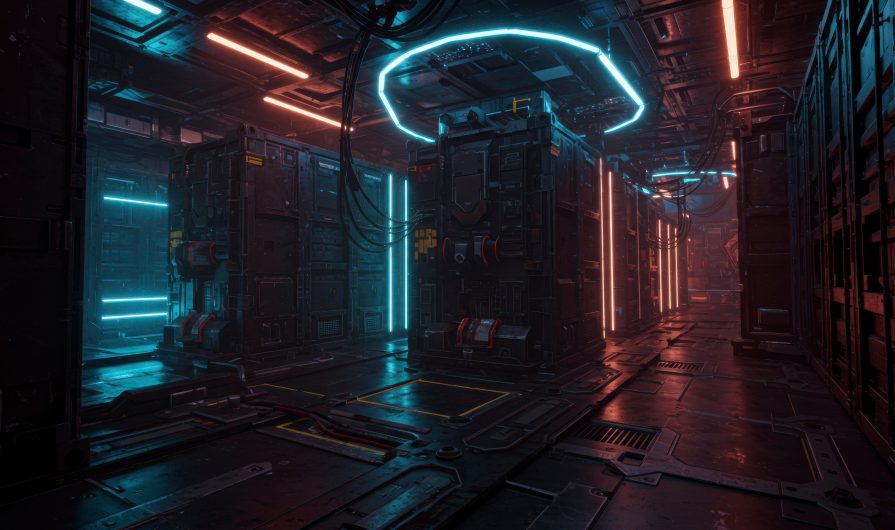
The second artefact of study is a restored server tower with the name ‘Pandora’. The name is a reference to the Greek Myth of Pandora’s Box. Earthborn humans of the 21st century would often name their technology after myths, pop culture references or inside jokes. It is another example of the humanisation of technology and machinery that was common in the Information Age.
Pandora was used as a personal web archive for an individual who had a passion for Cyberinfo preservation. Personal servers were common amongst those who had a passion for technology, data privacy concerns or like the owner of Pandora, had a passion for Cyberinfo preservation.
After further restoration and reformatting, I was able to start cataloguing the data stored on the server. The data is a mix of personal data (i.e. personal writing, photos, documents etc) and Cyberinfo. The owner of Pandora used it as a personal library to preserve digital material. So far, I have uncovered countless books, webpages, audiovisual content and the code for several interactive storytelling titles.
The information on Pandora is staggering. All of it curated by one individual who cared about the preservation of Cyberinfo in a time where thousands of bytes of data were being created and destroyed each day.
These two artefacts provide the CCA with clear evidence that earthborn humans of the information cared about the preservation of Cyberinfo. The data preserved was not just information and documentation but personal ephemera like photos, writing and audiovisual content.
The reason why this personal data was preserved in both digital and analogue formats remains unclear, but from my research I can only assume that people wanted to be remembered for future generations.
The CCA’s key purpose is to preserve and protect the knowledge stored on the Internet but I also believe that we are custodians of memory. Memories of the billions of people who left their mark on the Internet.
It is our duty to preserve their memories alongside their history.