
By Siobhan Lake
Slumped on a park bench and still grasping the letter that had been sitting in her mailbox all week, Hilda accepts that she will not be able to contest her parking fine. She cries, she shakes. Her body is trembling, almost like a washing machine during the spin cycle. Almost. Crying invariably reconciles her to the truth of her body, that it is not a machine of any kind and instead consists of warm blood and fleshy organs that no diligence could transform into the cold, logical shell she’d like it to be.
Hot tears roll down her cheeks, belabouring her body’s message that it is warm-blooded and there’s nothing she can do about this. Nothing. She has to pay the fine, rent, and groceries. She also has Nathan’s birthday dinner. She begins the percussion of hyperventilating and sniffing. It is humiliating. Stop it. Stop it. She clenches her fists. Stop it. Go home, buy some nice food, or maybe don’t buy nice food. Or any food.
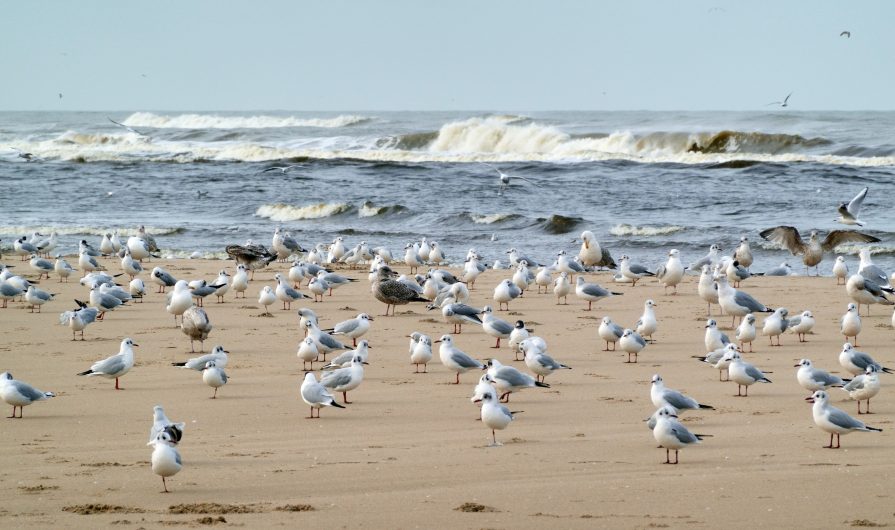
She tries to calm herself through advice she’s gleaned from social media infographics, ones difficult to read because of the penchant for many accounts to deliver their messages through white text layered over hot pink. Five things she can see, one: a seagull, two: a blob dangling from the seagull’s beak. The bird is staring at her, or at least they appear to be staring at her. Three and four: the seagull’s scary eyes. They possess the nightmarish pupils of their species, the ones that appear to be perpetually looking at everything all the time so it’s impossible to discern their real subject. The small blob dangles helplessly from their mouth, legs rocking back and forth. They also have wings and webbed feet. Effortlessly, the seagull swallows the duckling.
Hilda sniffles. She searches for other witnesses to the crime, locating a mum and toddler by the pond (‘look at the pretty ripples’), a couple disposing their empty coffee cups (‘shall we head off?’), a group of young people sharing a joint (‘you need to inhale longer’). Hilda’s tears stop and she says to no one: ‘What the hell?’
Hilda is seated at the end of a ten-person table with Kelly and Rita. Rita is glaring at Kelly, who is too focused on twisting the spaghetti around her fork, getting it all on the utensil while mopping up a sufficient amount of sauce, to notice Rita’s resentment. Kelly’s efforts fail and long lines of spaghetti nakedly dangle from the fork.
Hilda informs them, ‘Seagulls eat ducklings.’
‘Oh yeah,’ says Kelly.
‘I saw it happen at the park today. It was really distressing.’ Rita reaches out her hand to Hilda.
‘Nature is just like that,’ Kelly shrugs.
Rita snaps, ‘Did you not hear her? It was re-a-lly dis-tres-sing.’
Kelly matches Rita’s pointed tone. ‘It is nature. Na-ture.’ Kelly immediately recoils, surprised at her delivery and looking slightly flushed. ‘Sorry, Rita.’
‘Is it common knowledge that seagulls eat other birds?’
The question travels from their end of the table to the other and all members of the booking unite for a singular discussion. Nathan offers, ‘I guess they eat a lot of weird things. I once read about a bunch that got drunk after eating rubbish from a distillery.’ Kelly laughs, lifts and drops her palms, playacting small flaps and pretending that her bird hands have lost their balance and are colliding with Rita. A few people giggle while Rita sits sullenly. What’s her problem?
‘I read about a chihuahua who was abducted by a seagull,’ says Nathan’s brother. He locates the news article, excitedly showing his phone to the people next to him while completely oblivious to the fact that his finger is covering the headline. The table orders another few bottles of wine.
Hilda would love to lament her parking fine, but she can’t escape seagull discussion. Other corners of the table are not talking about seagulls, and Hilda tries to work out how to manoeuvre her way to them, sick of being stuck in a group parroting the same exhausted ornithological discussion that is neither original nor interesting at this point of the night.
‘A baby duck – wow. Can’t they just survive off of hot chips?’
‘They’re not supposed to eat those, it’s not natural and it’s bad for them.’
‘So it’s natural for them to eat baby birds?’
‘More natural than chippies.’
Hilda stumbles into the bathroom. How much wine have they ordered and oh God, how much is this going to cost? This and the parking fine.
She grasps hold of the sink as Kelly enters. ‘You don’t look so well. Maybe we can stay here for a bit? I also need to get away from Rita. I don’t know why she’s being so rude to me.’ Hilda nods.
When Hilda and Kelly return to the table, the group is frustratingly on the topic of seagulls’ fecundity. They locate evidence for this in the precipitous amounts of poop outside some of the city buildings.
‘I think a lot of that comes from pigeons.’
‘But you can’t deny that the population seems to keep increasing. Our rubbish and hot chips aren’t killing them fast enough.’
‘Don’t say that. There’s something admirable about them. They have a real audacity, a real resilience,’ says one of Nathan’s coworkers like she’s mentally drafting a networking post, What Your Small Business Can Learn from Seagulls.
‘Resilience? They’re opportunistic pests. Also, it’s insane that they’ve developed a taste for human food but never put in any effort to make themselves endearing to us. They’re just constantly harassing us.’
‘But why should they change?’ Counters another coworker. ‘Their current strategy of being as annoying as possible is clearly working.’
Hilda anxiously pays her tab and tries not to think about her bank balance. She approaches Nathan. ‘Happy birthday, I hope you had a good night and sorry for turning the conversation to seagulls.’
‘That’s fine, it sounds like a pretty rough experience.’
‘It’s honestly not the worst thing that happened to me today,’ Hilda says softly.
‘We’ll have to catch up soon,’ says Nathan as he hugs her. The headlights from the tram illuminate their embrace and elongate their shadows. Hilda moves quickly because, unlike the rides her friends are ordering, this one will not wait for her. She tries to just be grateful that she still has the option of public transport at this point in the evening.
On the tram Hilda receives a text from Kelly.
Hey sorry, I still need to transfer you for Nathan’s present. How much was it again?
Hilda is confused. A month ago, Rita, Kelly and Hilda agreed to each put in $100 for a temperature-controlled kettle for Nathan, but Hilda didn’t purchase the present. Rita did.
Hilda may never understand why any creature would eat a member of its own species but, like Nathan’s coworker said, maybe there is something admirable in the seagull’s adaptability and willingness to meet their environment. Maybe their opportunism and capacity to uncritically pursue whatever path presents itself is inspiring.
Thanks Kelly. It was $120.